

Dance Party Yoga Gone Wrong

Adepts have told us that yoga can be found in anything. But does that mean that anything can be yoga? With all the mixing and combining of yoga with other activities going on these days, the line between what constitutes a yoga practice and what does not has certainly become blurred and invites us to wonder why so many people find yoga insufficient on its own.
A quick google search reveals an array of hybrids and pairings: yoga and pilates, yoga and fitness, yoga and martial arts, yoga and capoeira, yoga and wine, yoga and chocolate, yoga and weight-loss, yoga and writing, yoga and whatever someone can think of to try and create a niche for themselves. The trend is understandable. Niche marketing in today’s economy is often essential to survival.
However, there comes a point where being all-inclusive and marketing anything under the sun as enhancing a “yoga lifestyle” ends up sacrificing the real benefit of yoga practice. Of course, there is the supposed silver lining that even if yoga is being exploited, these ploys are still exposing people to yoga; but this is really nothing more than a red herring.
As many of these potentially yoga-related pursuits are becoming more popular, they are also becoming an obstacle to people actually learning yoga and understanding the role of yoga as a true wellness profession. Anyone who is able to see past all the noise, including a growing number of doctors and scientists, will attest to the healing capabilities of authentic yoga practice. But if there are only hybrids and gimmicks available then where will actual yoga practice be found?
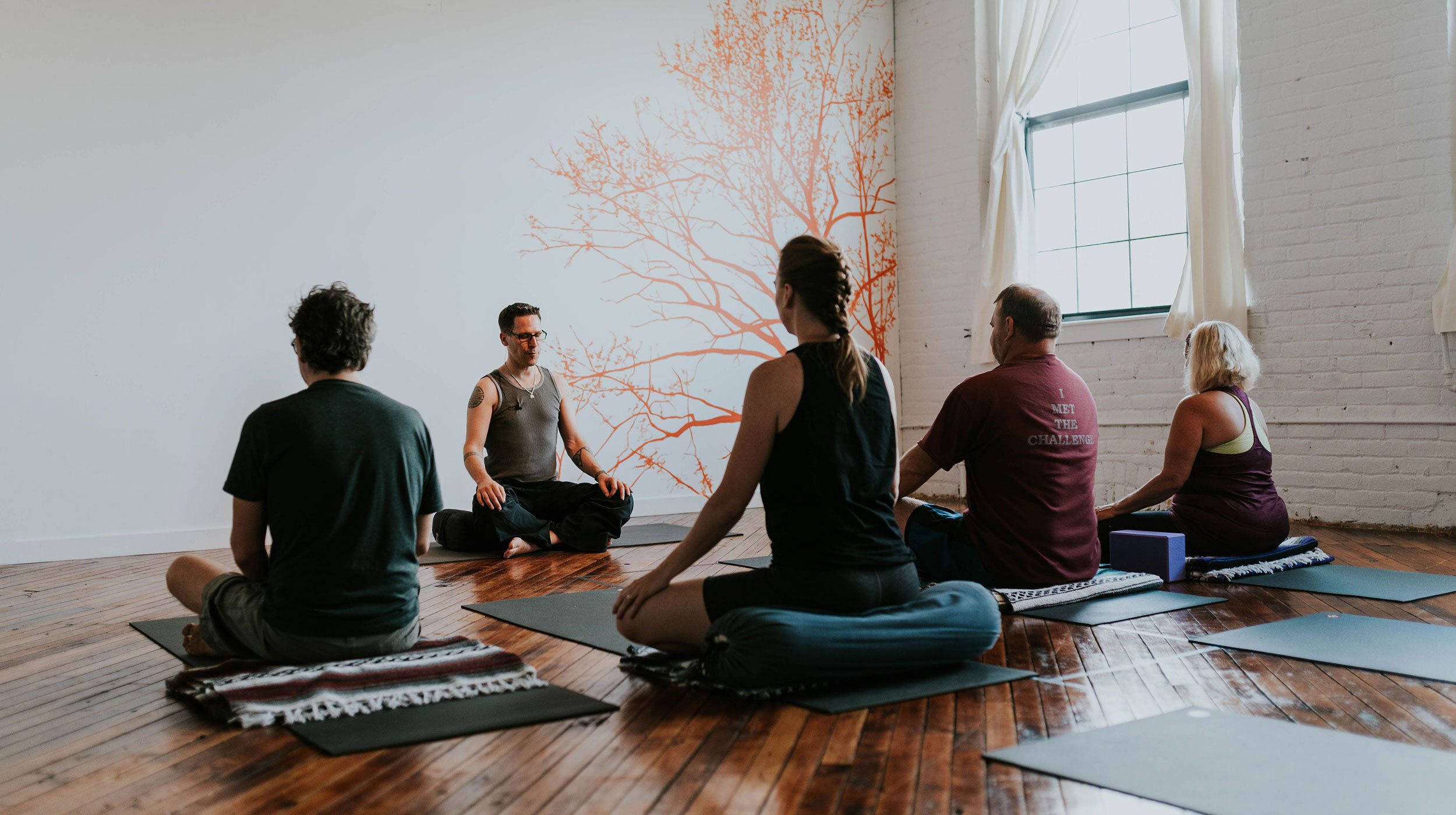
A particular example of where the dilution of yoga can be misleading and even detrimental is the newer phenomenon of grafting yogic ideas onto interpretive dance and remnants of the 90′s rave scene. “Trance yoga dance” is becoming common at yoga centers and even caused a bit of controversy at the last international yoga conference.
Some studios are now offering “yoga raves” where after everyone is feeling good from a rigorous physical practice they put on some loud techno music and dance into blissful ecstasy. Certainly nothing altogether harmful about that, probably better to be blissed-out on yoga then on MDMA; the only issue is conflating this yoga trance dancing with learning Hatha Yoga.
When I was thirteen years old, I was notorious for being the only boy who would dance at a party. Consequently, I think I may have attended more Bar Mitzfa’s that year then any other boy previously in the history of the San Fernando Valley of California. I’ve never been ashamed to admit that I love to dance. I took college level courses in experimental movement, attended contact improv jams and undulated myself into primordial trance states. As 1992 rang new, I shared in ecstasy-induced communal bliss with thousands of youths in a giant warehouse in downtown Los Angeles. And I can say definitively that getting out of my head on the dance floor, whether my dance moves consist of yoga poses or not, is not even close to the same thing as learning to employ the tools of yoga practice as a genuine form of self-care and personal inquiry.
Overcoming the profound obstacles that life inevitably presents and discovering a sense of harmony through an inner vision and outer display of actions and attitudes requires more than the sweaty zeal of techno music and the slogan “follow your bliss” can ever offer. When the senses are overloaded, the essential attention to experience is missing. It is like trying to have a nuanced conversation with a friend in a loud bar when you have to scream to be heard. Or, as if there were a doting lover sitting across from you at a romantic candle-lit dinner but you’re on your iphone checking email out of habit.
As yoga classes more and more resemble yoga raves, fewer people are learning yoga in them.
When yoga practice is left sparse, without other distractions, it challenges us to be more intimate with ourselves and honest in what we discover. Of course, this is the very thing that many us would much rather avoid. When something is amiss in ourselves or our environment, clarity is not always desirable. Intense physical challenge and a bombardment of the senses are appealing because they gets us “out of our heads” in the same way that trance dancing might.
An actual practice of yoga will naturally find its way into everything else, maybe even trance dancing. But in order to have yoga in all things, we must first learn yoga. No one is going to learn yoga if we don’t, at least, turn down the music a bit and pay closer attention to what we are doing. And we must not confuse what it means to learn yoga as a healing modality with what it means to celebrate yoga in other activities. Having dance parties is fine, but attempting to multitask and advertise yoga into everything causes us to miss the point. And it debases the profession.
In this last of the series video blog, I discuss what yoga is to me and the role my practice played in arriving at that determination:


This is how I feel about yoga classes where the “playlists” (really, playlists?) are just as valued as what’s done in the practice.
When we do this, or otherwise modify the practice, we are attempting to adapt it to ourselves, rather than allow the practice to change us. In this way, we learn nothing except to use what can be a powerful transformative practice, to cater to our own needs and wants. This is not how we learn, but how we buffer. Sad, but true.
Hi J-
Interesting stuff, as always. I may have to disagree here, though. When I first started practicing yoga, I took a class that sometimes incorporated “dance” into it. Maybe that’s the issue– it wasn’t really “dance” so much as a free form body shaking movement that occurred without loud techno music– instead the teacher instructed us to close our eyes and feel the energy in our bodies and move around in any way that felt right. (It was some of the best therapy for me at the time because I was very anxious and it released a lot of energy and not in the way of riding a bike or running a marathon or even dancing at a club would.)
I felt really connected to my body and its energy in a way that I’ve since wondered if maybe I should take more yoga/dance or incorporate more dance/movement into classes. I felt free and truly connected to myself which is one of my goals from yoga practice.
I can see how dancing around with fellow yogis in a club-like atmosphere may not be the same thing, but maybe like everything (and individualized yoga) it really does depend on the person.
I felt similarly connected to myself when I went to a first trance dance rave at YJ conference with Shiva Rea. Other people may have been testing out their fancy moves, but I really could hear and feel my body and the energy in it in a way was very different from when I go out to dance, sing along to the lyrics and try out dance moves at a loud bar/club. Being guided to feel your body and move in a way with it’s energy and listen to it in a safe, exploratory environment is a very different experience for me.
Maybe it’s what they say– it’s not what you do but how you do it.
Also wonder if you think there’s a difference between specific body shaking/free form movement as yoga (dance therapy or somatic movement to release trauma) vs a specific yoga rave that incorporates loud music? Maybe the issue is with the other people or loud music causing too much distraction? In that case, maybe. But still, not necessarily from my experience…
All the best-
Barbara
Your honesty and clarity blow me away. Another great video
The path to Yoga is the intimate personal practice that a person commits to. The other is building communities. One should be aware of oneself first, before extending that awareness to the broader community.
i like this very much, jason
Nice video.. Interesting